

10 – 13 November 2026
Wrest Point, Hobart, Tasmania
The TMOS Meta Together Conference is here!
About Meta Together
Meta Together is the annual conference of TMOS. Its purpose is to bring members together to share research, foster collaboration and engagement across the Centre, and build a lasting legacy beyond TMOS.
Who should attend Meta Together 2026?
Meta-Together 2026 is open to members and guests of TMOS.
Who can present at Meta Together 2026?
Invited Talks (40 minutes)
Invited Focused Tutorials (40 minutes)
Contributed Talks (15 minutes)
Posters: PhD students and Early Career Researchers (ECRs) can present their work in poster format. Nominations must be indorsed by a TMOS Chief Investigator.
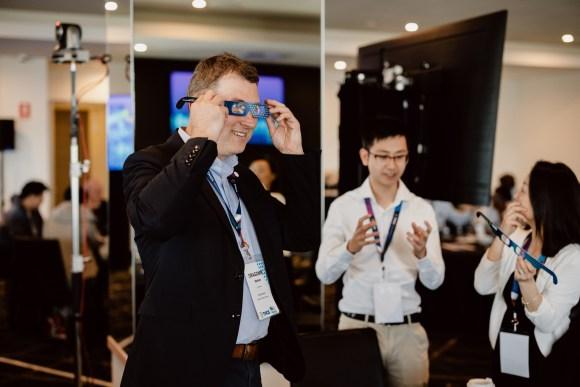
Dragon’s Den 2026: A dynamic session where participants pitch innovative ideas to a panel of experts.
Invited Speakers
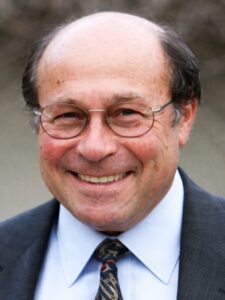 Yeshaiahu (Shaya) Fainman “Foundry enable photonics and applications’
Prof. Fainman is involved in design and realization of ultrafast and miniature optical systems. Current research interests in his group include photonic crystals (band gap); 3-D holographic optical storage for image processing; the investigation of artificial dielectric properties of nanostructures; transparent photonic switching fabric and networks; diffractive optics with multifunctionality; and quantum communications and cryptography for photonic network security and privacy.
Optical signal processing is a major thrust of Fainman’s research, and he is pioneering development of optical code division multiple access (OCDMA), an optical version of the CDMA technology on which most U.S. wireless telephone systems are currently based. OCDMA itself is based on a technique called NSTP–nonlinear spatio-temporal processing. It utilizes pulses from femtosecond lasers to enable the conversion of spatial and temporal information from one domain to the other. Fainman says OCDMA is intrinsically more secure than traditional wavelength division or time division multiplexing and will permit optical networks to operate in excess of 1 terabit per second.
Fainman is a Cymer Professor of Advanced Optical Technologies in Electrical and Computer Engineering at the University of California, San Diego (UCSD). He received his M.Sc and Ph.D degrees from Technion, Israel in 1979 and 1983, respectively. From 1990, he has been directing research of the Ultrafast and Nanoscale Optics group at UCSD and has helped to make pioneering contributions to utilizing near field optical phenomena in inhomogeneous and meta-materials, nanophotonics and plasmonics, nonlinear optics of femtosecond pulses and non-conventional imaging. His research applications target information technologies and biomedical sensing. He has past experience in leading large-scale multidisciplinary projects. For example, in the early 90’s he was director of a project on “Photonic Imaging Networks,” supported by the Focused Research Initiative program of BMDO. Also, as director, he has led one of DARPA’s OptoCenters (Optofluidics), DARPA’s Si Phaser and NACHOs programs, and he is currently a Deputy Director of NSF’s Engineering Research Center known as the Center for Integrated Access Networks–CIAN. He is a Fellow of the Optical Society of America, Fellow of the Institute of Electrical and Electronics Engineers, Fellow of the Society of Photo-Optical Instrumentation Engineers, and recipient of the Miriam and Aharon Gutvirt Prize, Technion, Haifa, Israel (1982), Lady Davis Fellowship (2006), and Brown award (2006). His current research interests are in near field optical science and technology compatible with CMOS manufacturing. Specific research projects include (i) design, fabrication and experimental validation of nanoscale resonant optical structures and devices exploiting both dielectric and metalo-dielectric nanostructures; (ii) nanoscale lasers and evanescent field imaging and sensing; (iii) plasmonic nanostructures for electromagnetic field localization beyond diffraction limit, enabling biomedical sensing and imaging on the nanoscale in all three spatial dimensions; (iv) optofluidics technology integrating microfluidics with micro- and nano-scale optics for sensing and monitoring; (v) optical signal and information processing using femtosecond laser pulses; (vi) quantum cryptography, communication, and quantum information processing; and (vi) multidimensional quantitative imaging in near and far fields. He has contributed over 200 manuscripts in peer review journals and over 350 conference presentations and conference proceedings.
Day 1 – Wednesday 11 November 2026
Day 2 – Thursday 12 November 2026
Day 3 – Friday 13 November 2026
Dragon’s Den at Meta
Exciting news! Building on the fantastic success of last year’s Shark Tank session, we’re introducing something new at this year’s Meta Together Conference…
TMOS Dragon’s Den!
We’re inviting PhD candidates and Early Career Researchers to pitch their coolest ideas—be it a clever gadget, an outreach tool, a research translation concept, or something entirely unexpected.
The Winning Team will get $$$$, while the Runner-up Team will get $$$ to bring their idea to life within 12 months.
Please note: Prize money is allocated for project funding and is not a personal cash prize.
Why are we doing this? Our goals:
- Foster teamwork and collaboration across nodes,
- Enhance skills in pitching and idea communication,
- Encourage creativity, innovation, and a bit of fun.
What can you pitch?
Pretty much anything! A business idea, a hands-on outreach gizmo, a piece of tech, or even a concept that brings research to real-work impact. During Meta 2026 – each team will have 15 mins to pitch the idea to the Dragons. The best pitch wins!
Cross node participation is mandatory, and each team must have between 3-6 participants.
Want to enter?
- Choose a name and a title for your idea/pitch and submit your EOI to tmos@anu.edu.au
- Submit your application by the deadline: 31 August 2026.
For eligibility, more information and FAQs, click below:
DRAGON’S DEN AT META – INFO & FAQS
Accommodation
Please note that all accommodation bookings and payments must be arranged by Node Chief Investigators (CIs) in accordance with your university’s policies and financial regulations.
Conference Venue
The conference will be held at Wrest Point, 410 Sandy Bay Road, Sandy Bay, Hobart, Tasmania, Australia.
Wrest Point offers a range of accommodation options to suit different needs. In addition to standard hotel room configurations, twin-share rooms are available. Accommodation options are also suitable for TMOS members travelling with family.
Registration
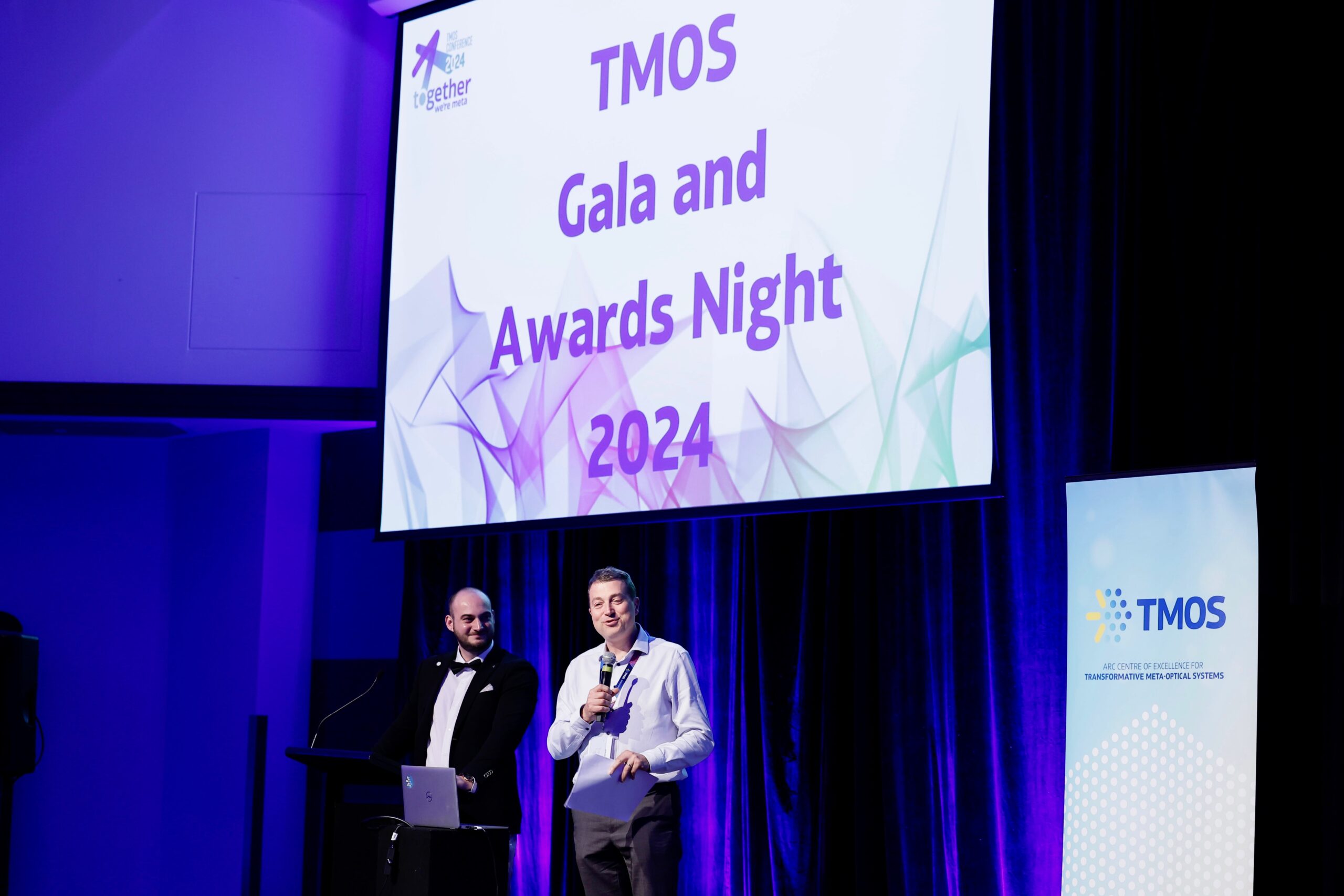
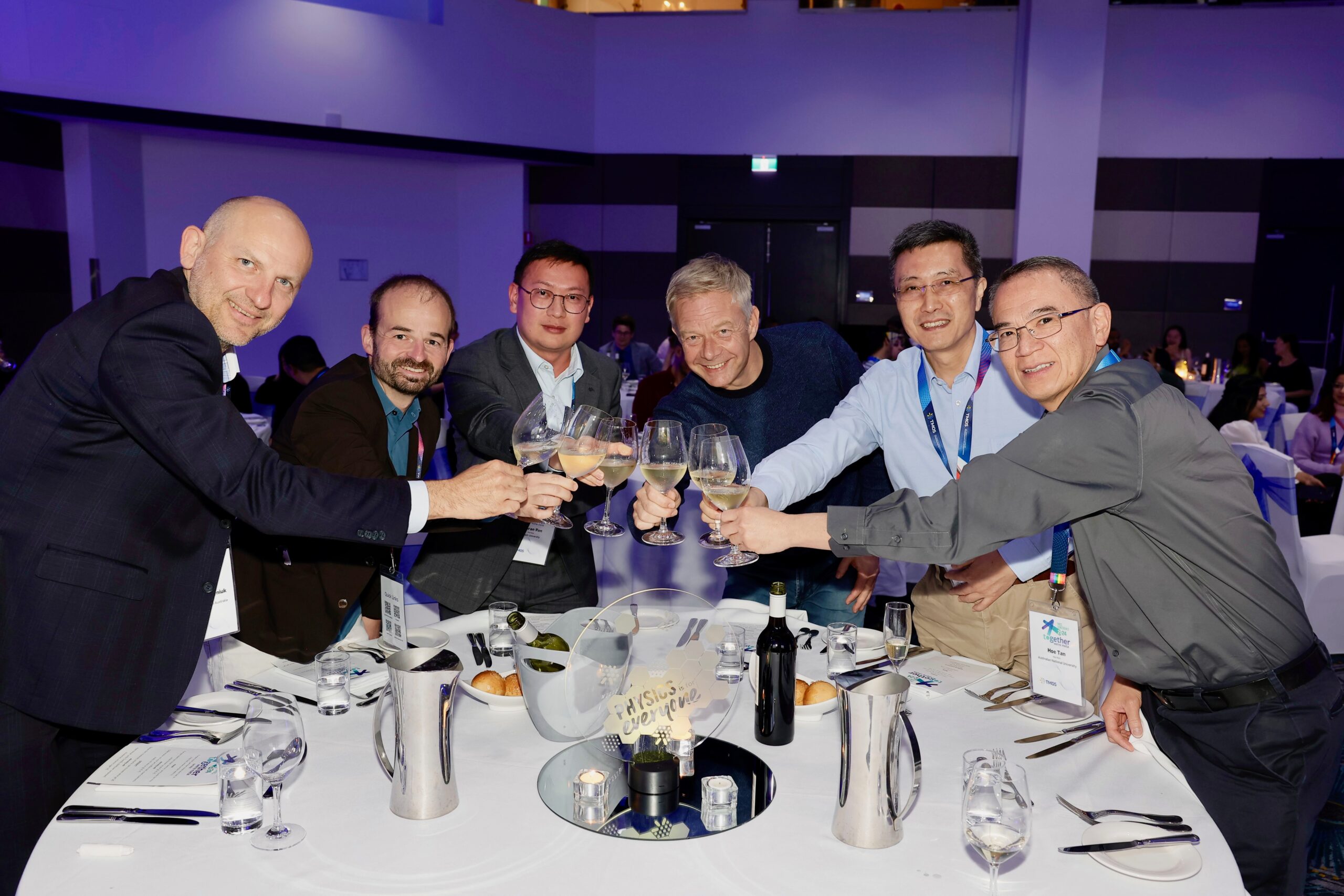
Registration includes attendance at the conference, Welcome BBQ Dinner, Gala Dinner and Awards Night, all lunches, coffee breaks and social drinks.
By registering for this conference, you agree to the Terms and Conditions.
REGISTER
Carer Scholarship
TMOS recognises that caring responsibilities can present major barriers to participation in TMOS related professional development.
This is why we’re offering our members financial support for either their own care needs or the care responsibilities of others when attending the TMOS Annual Conference.
Please use this form to our policy and/or apply for this initiative.
SUBMIT an abstract
Presentations
ABSTRACT SUBMISSION GUIDELINES
Important dates
- Oral/ Poster Abstract Submission: 1 June – 3 July 2026
- Conference Registration: 3 July – 31 August 2026
- Dragon’s Den Full Application Submission: 1 May – 30 September 2026
Conference program
TMOS 2026 Conference Program
Conference details for attendees
All delegates have received a link to the official TMOS Meta Together Conference 2026 website, which contains the program, delegate information pack, link to Conference 2026 Slack Channel, and other helpful resources. Check the email sent to you by the conference organisers.
Contacts
 Eleanor Luond
Professional Staff
RMIT University
 Liz Micallef
Professional Staff
Australian National University
Steering Committee
Madhu Bhaskaran
Chief Investigator
RMIT University
Kenneth Crozier
Centre Deputy Director
University of Melbourne
Dragomir Neshev
Centre Director
Australian National University
H. Hoe Tan
Chief Investigator
Australian National University
Mariusz Martyniuk
Chief Investigator
University of Western Australia
Galina Shadrivova
Business Manager
Australian National University
Liz Micallef
Professional Staff
Australian National University
Eleanor Luond
Professional Staff
RMIT University
Peter Francis Mathew Elango
Research Fellow
RMIT University
Toby Severs Millard
Postdoctoral Researcher
University of Melbourne
Local Organising Committee
Meta Together 2025


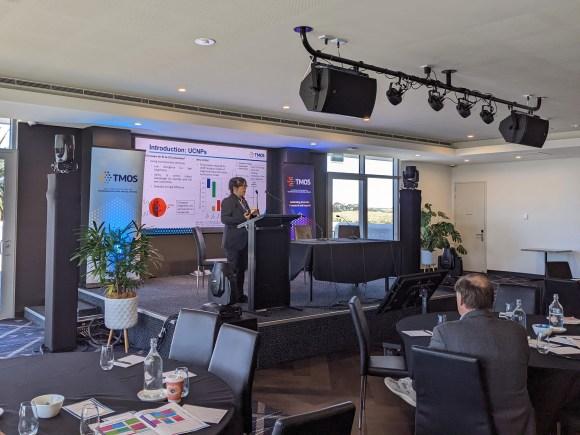
Meta Together 2024
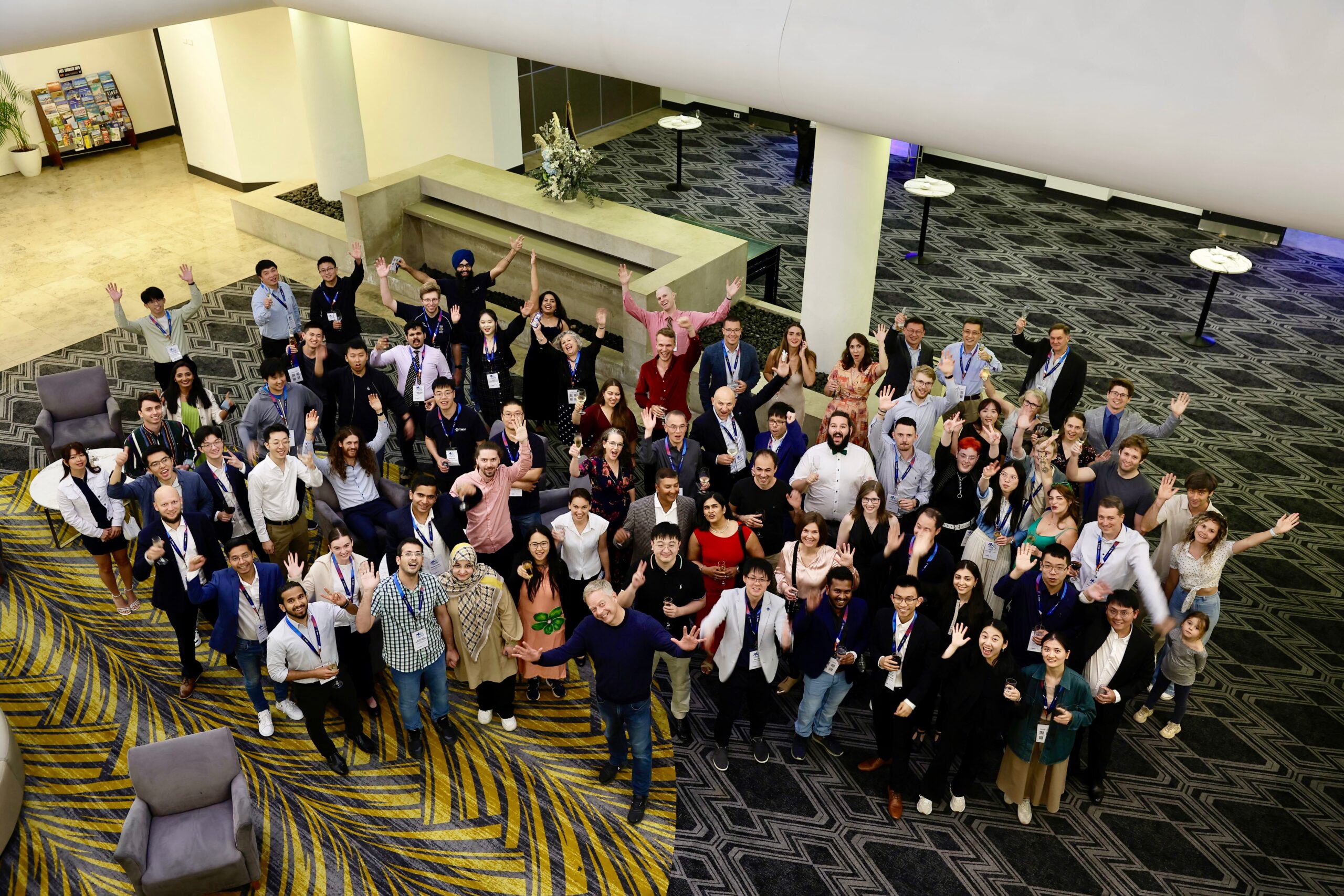
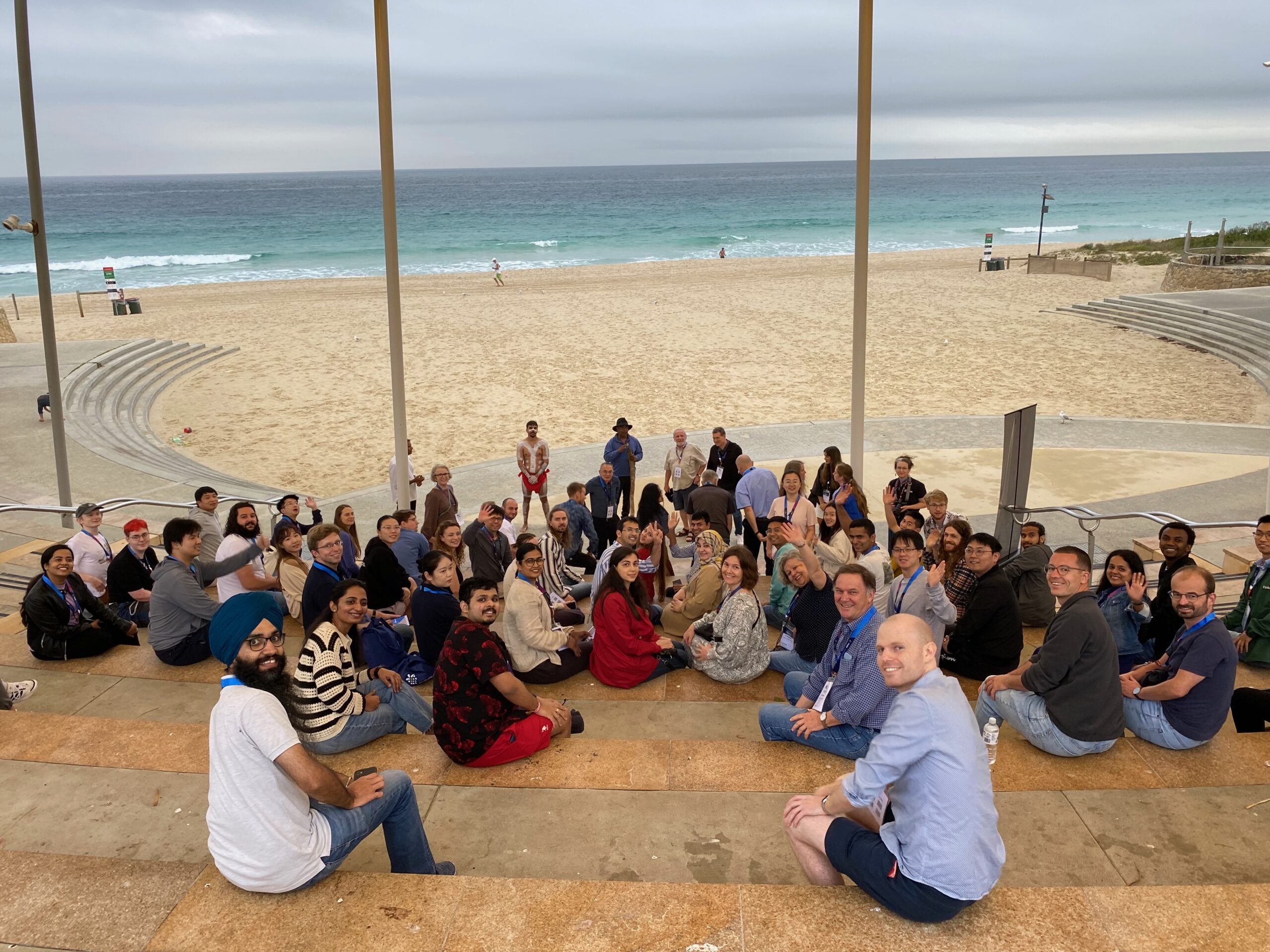
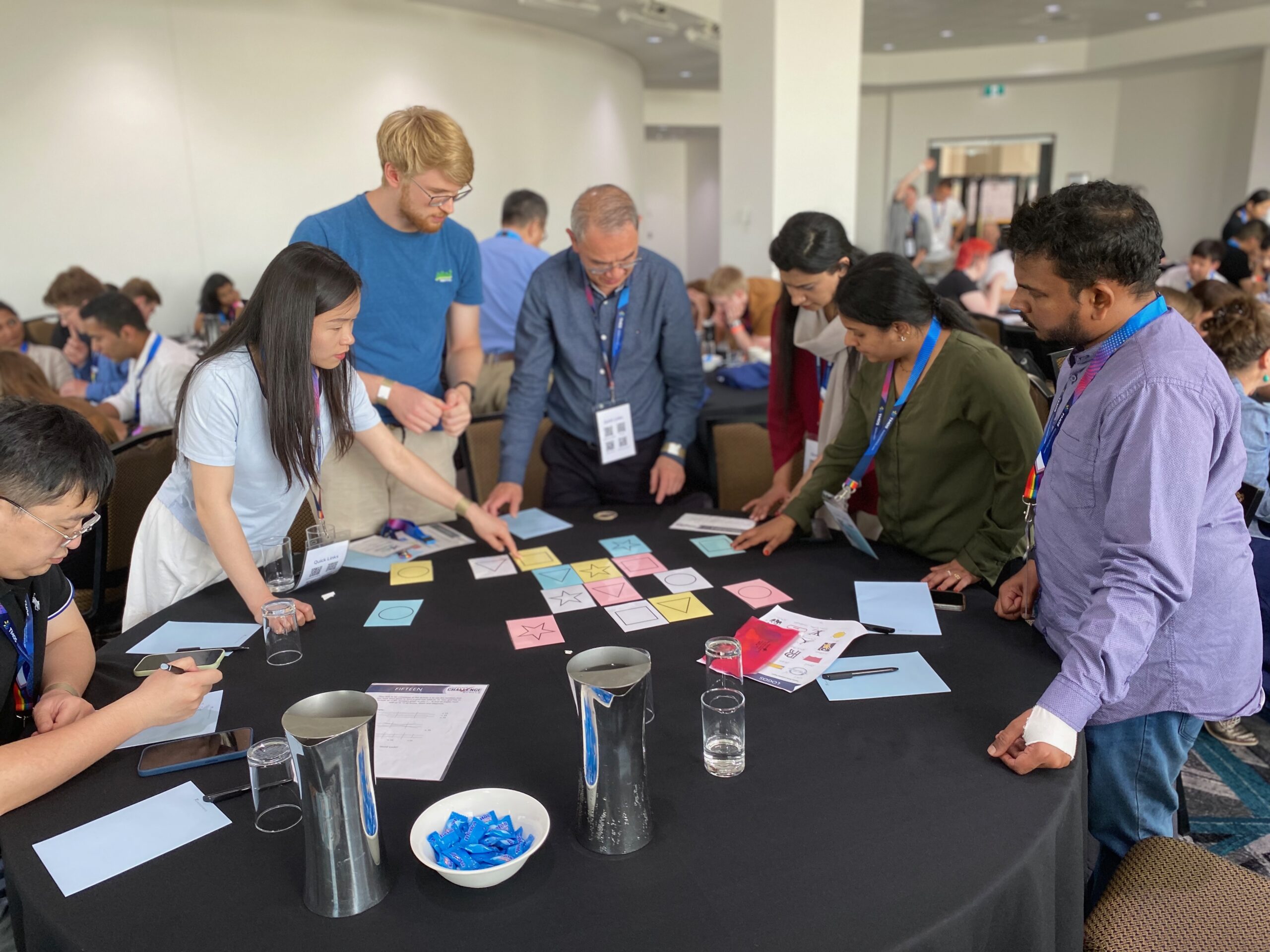
Meta Together 2023
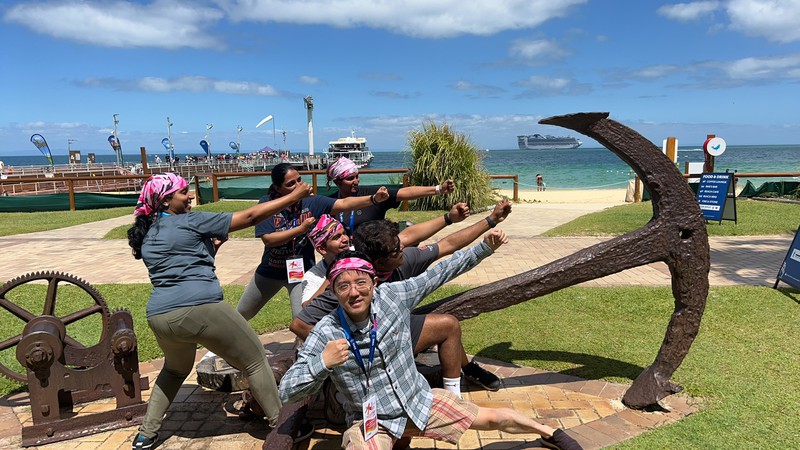
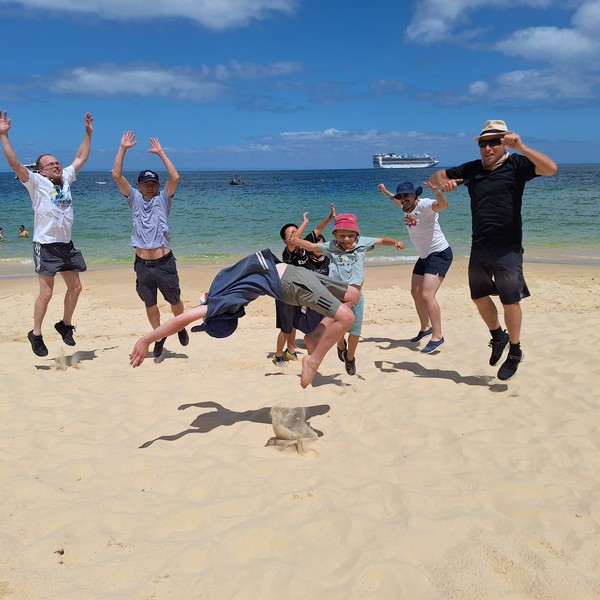
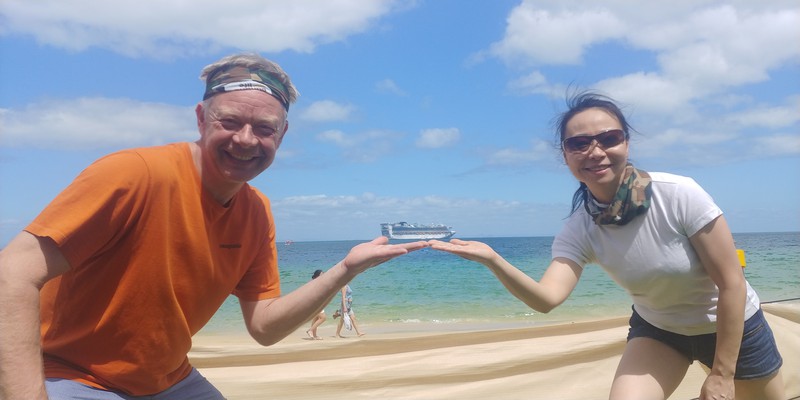
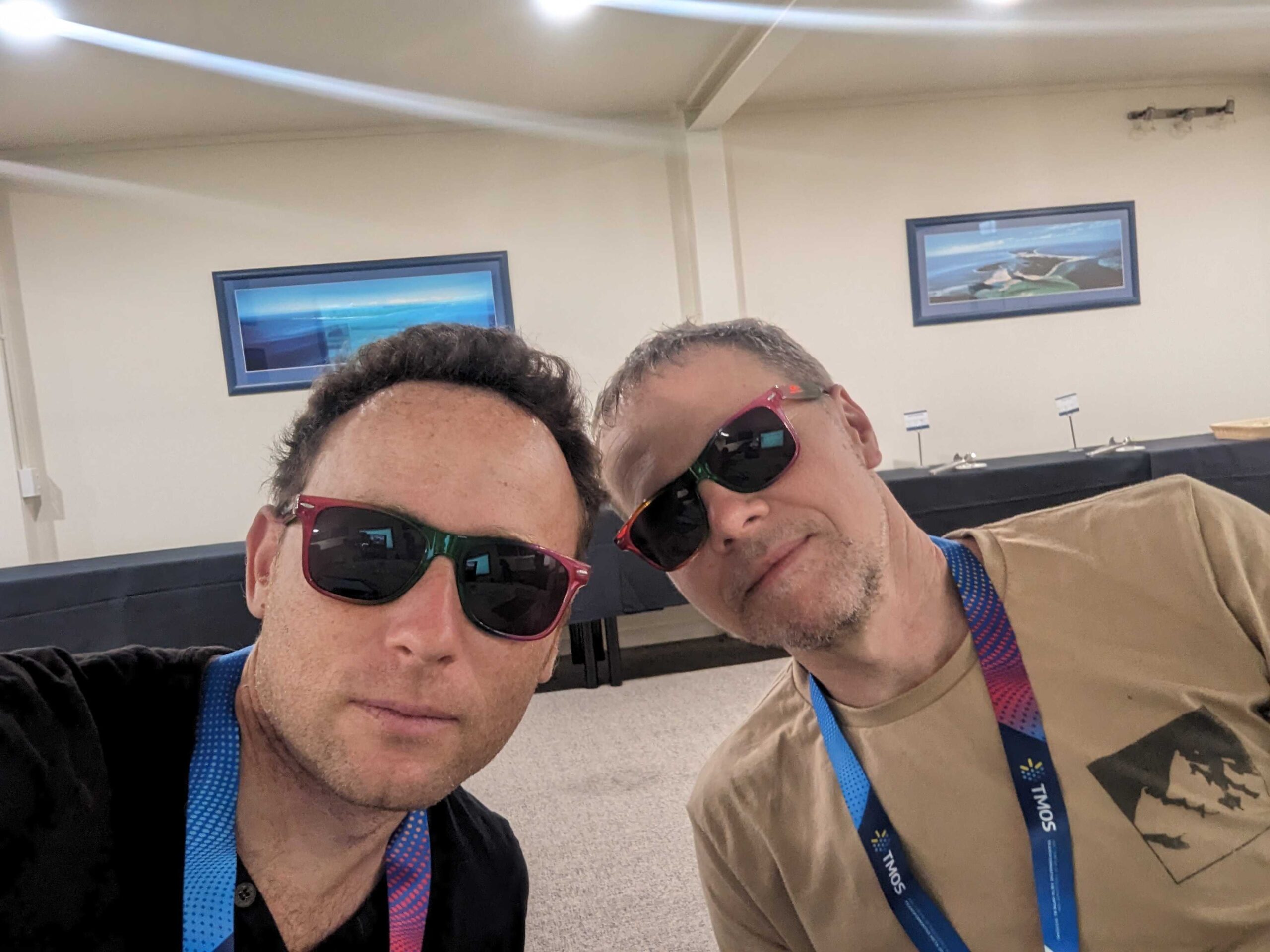
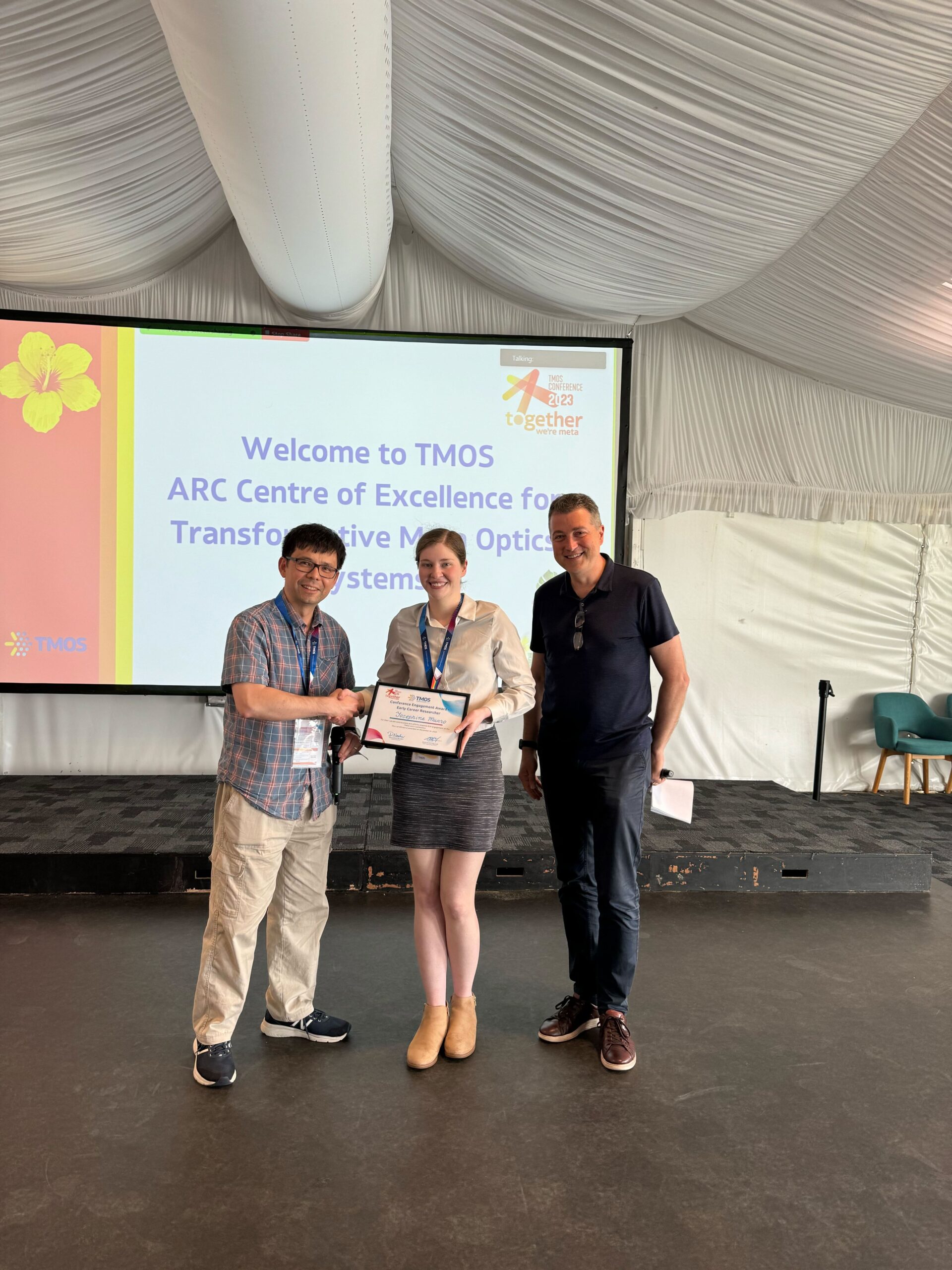
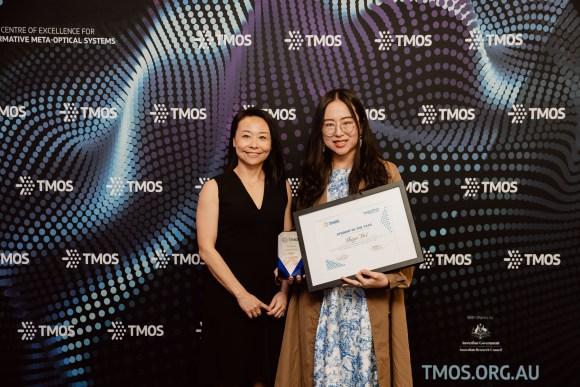
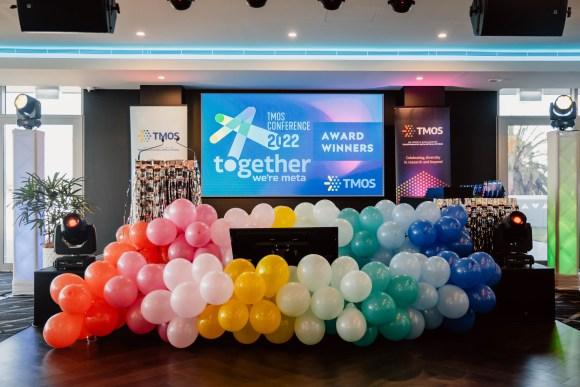
Meta Together 2022
Acknowledgement of Country
The ARC Centre for Transformative Meta-Optical Systems (TMOS) acknowledges the Traditional Owners and their custodianship of the lands on which our teams operate. We pay our respects to their Ancestors and their descendants, who continue cultural and spiritual connections to Country. We recognise their valuable contributions to Australian and global society.